Transfer students lose, on average, 43% of the credits they have already earned.
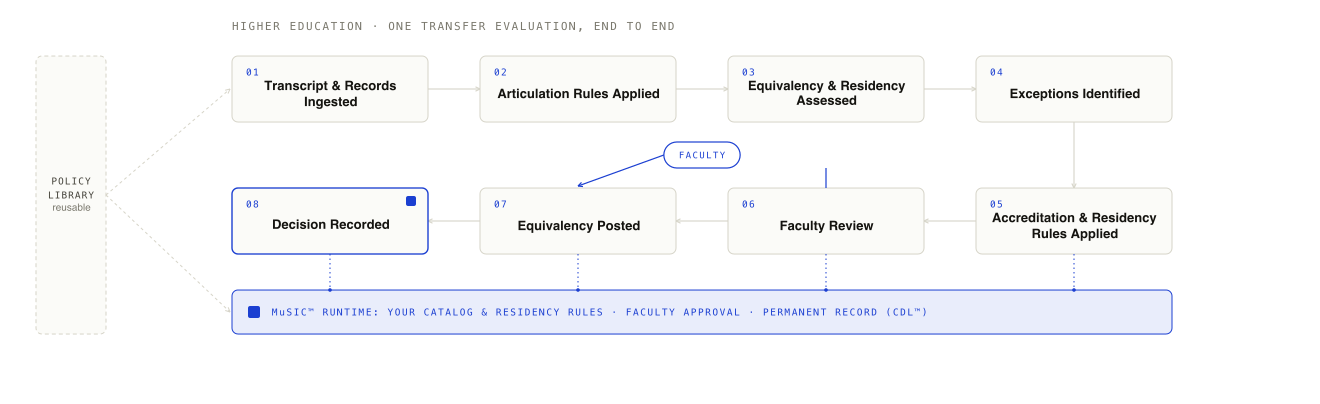
Every lost credit is a decision. Here is how it is designed to run: agents read the transcript and propose the match, your rules decide what counts, faculty rule on every exception, and every credit, accepted or not, carries its reason.
One platform across your academic workflows: shared agents, one set of rules, and every campus on the same playbook.
Source: U.S. Government Accountability Office, GAO-17-574 (2017), students who transferred 2004 to 2009.
Transfer credit, evaluated at scale, with faculty in charge.
Every incoming transcript is thousands of small decisions: does this course satisfy this requirement, at this institution, under this catalog year. Done by hand it is slow and inconsistent. Here, agents parse the transcript and propose equivalencies; your rules apply accreditation and residency requirements; faculty and registrars decide the exceptions; and every decision is recorded.
Institutions run on systems for everything except the decision.
Your student records, learning and admissions systems stay as they are. MuSIC runs the evaluation decision between them.
Other tools move tasks, show status, or assist one person.
MuSIC runs the workflow and owns the decision inside it.
The decision, the rules it runs by, the faculty member who approves exceptions, and a record of every run.
What we will measure.
These are the numbers we agree on with you before work starts. We publish a figure only when it comes from a real engagement.
See the transfer-credit workflow mapped to your institution.
A working session for institutional leadership: where evaluation throughput and consistency fall short today, and how MuSIC would run this workflow with faculty authority preserved and a record of every decision.
For provosts, registrars, deans, chief enrollment officers, and academic operations leadership.